

"Doctor, will this stone need an operation?" Two patients with stones of the same size may require completely different procedures. The decision depends on size, location, hardness, anatomy, and even patient choice.
One of the most common questions patients ask when they walk into the OPD with a scan report is: “Doctor, will this stone need an operation?”
The truth is that there isn't a single universal treatment for kidney stones. This guide explains the four main treatment options in simple language, so you'll understand why your urologist recommends one over another.
Factors That Decide Treatment
Doctors consider several factors before recommending treatment:
- Stone size — the most important factor.
- Location — kidney vs ureter stones behave differently.
- Hardness — CT scan density shows if shockwaves can break it.
- Blockage — whether the kidney is obstructed.
- Infection — must be treated first if present.
- Kidney function — overall health of the kidney.
- Body build & anatomy — some approaches may be difficult.
- Other health conditions — diabetes, blood thinners, heart disease, pregnancy, single kidney.
A 6 mm stone quietly sitting in the kidney may not need immediate treatment. The same 6 mm stone stuck in the ureter blocking urine flow could require urgent intervention.
Kidney Stone Treatment Options
Below is a breakdown of the 4 main treatment pathways to help you understand which might apply to you.
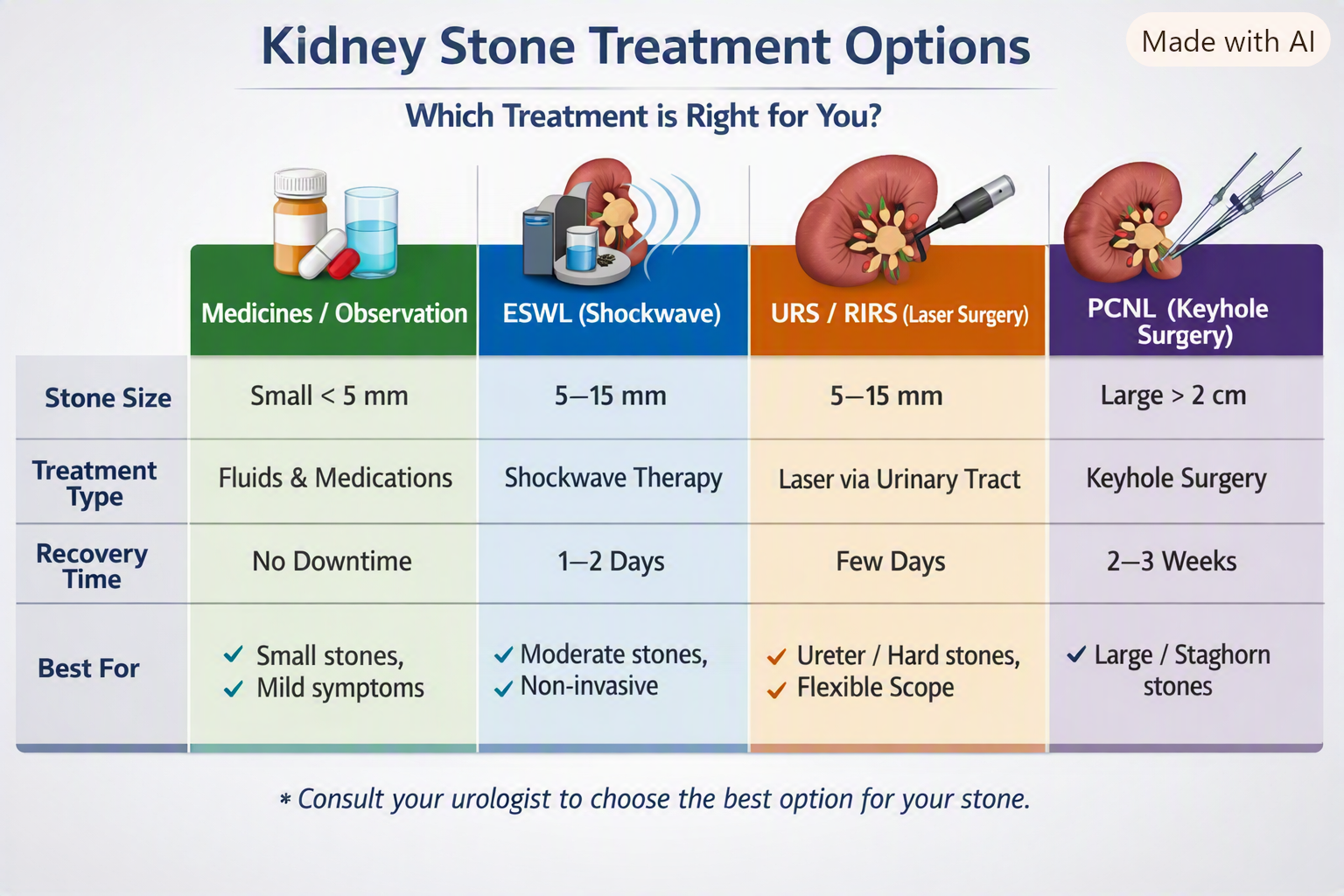
* Consult your urologist to choose the best option for your specific stone.
Option 1: Medicines & Watchful Waiting
Best for: Stones < 5 mm in the lower ureter with mild symptoms.
Approach: Fluids, pain relief, medicines to relax the ureter.
Recovery: No downtime.
Option 2: ESWL (Shockwave Lithotripsy)
Best for: Stones 5–15 mm in kidney/upper ureter, not too hard.
Approach: Shockwaves break stone into fragments that pass naturally.
Recovery: 1–2 days.
May need multiple sessions; less effective for hard or lower-pole stones. Has gone out of favour recently in some scenarios.
Option 3: URS & RIRS (Laser Surgery)
Best for: Stones in ureter or kidney (5–15 mm), especially hard stones.
Approach: Telescope and laser through urinary passage; fragments removed or passed alongside the stent.
Recovery: Few days; avoid heavy lifting for 2 weeks.
A DJ stent is usually placed after this surgery.
Option 4: PCNL (Keyhole Surgery)
Best for: Large stones > 2 cm or staghorn stones.
Approach: Small hole in the back; direct access to the kidney.
Recovery: 2–3 weeks.
Bleeding risk; requires stopping blood thinners prior to surgery.
The DJ Stent Explained
A DJ stent is a soft plastic tube placed from kidney to bladder. It keeps urine flowing while the ureter heals.
Symptoms while stent is in place: Frequent urination, blood in urine, flank ache, abdominal discomfort.
A DJ stent must be removed on time to avoid complications.
Preventing the Next Stone
Treating a stone solves today's problem, but prevention is key. Without changes, up to 50% of patients may form another stone within 5–10 years.
Stone Analysis
Lab test to identify the specific type of stone you formed.
Metabolic Workup
Blood and urine tests for recurrent stone formers.
Personalized Plan
Tailored advice based on your specific test results.
Ask your urologist about stone analysis and a metabolic workup to build a custom prevention plan.
Final Word
If you have a scan report showing a stone, bring it along with all previous reports and films. A short consultation with your urologist often gives clearer answers than hours of online reading.
Need to discuss your treatment plan?
Bring your scan reports and book a consultation with Dr. Manish Khattar at Medanta Lucknow. Get clear answers and a personalized plan.
📍 Medanta Super Speciality Hospital, Lucknow — 2nd Floor OPD, B-Wing, Room 33.
🕘 Mon–Sat, 9:00 AM – 5:00 PM.
Frequently Asked Questions
It depends on its location. If it's in the kidney with no symptoms, watchful waiting is an option. If it is stuck in the ureter blocking urine flow, ESWL or URS/RIRS may be required.
URS (Ureteroscopy) treats stones in the ureter, while RIRS (Retrograde Intrarenal Surgery) uses a flexible scope to treat stones inside the kidney. Both use laser energy to break stones.
No. PCNL is minimally invasive. It involves a small keyhole incision (about 1cm) in the back to directly access the kidney and remove large stones.
A DJ stent is a soft plastic tube placed from the kidney to the bladder. It keeps urine flowing while the ureter heals after surgery. It is temporary and must be removed on time.
Yes, stones smaller than 5mm often pass naturally with hydration, pain relief, and medications that relax the ureter.
You should ask your urologist for a stone analysis and metabolic workup. This identifies the stone type and allows for a personalized prevention plan.
Your urologist will give specific instructions, but PCNL typically requires stopping blood thinners to reduce bleeding risk. Discuss your medications with your doctor.
Related Articles
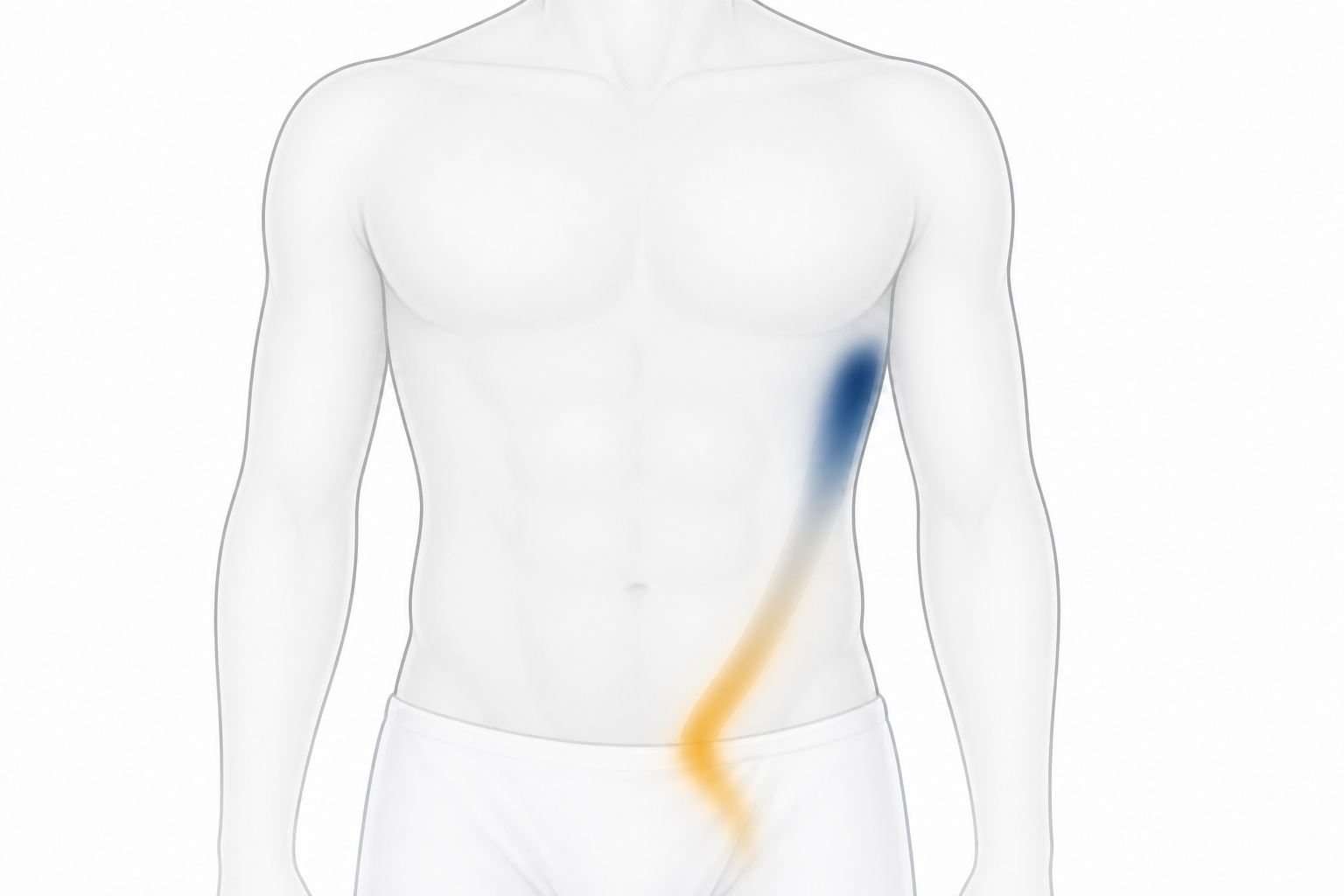
Kidney Stone Pain: What It Really Feels Like
Understanding the severe pain of renal colic and emergency warning signs.