
Kidney stone pain, also known as renal colic, is one of the most intense pains a person can experience. Knowing how it feels and when it signals an emergency can save your kidney—and your life.
Why kidney stones are so common in North India
Northern India, including Uttar Pradesh, lies in what doctors often call the "stone belt." Several factors make stones more likely here:
- Heat and sweating: Summers in Lucknow cause heavy fluid loss, concentrating urine and encouraging crystals to form.
- Low water intake: Many people drink less water, especially outdoor workers or those without easy toilet access.
- Diet: High salt, high animal protein, and low fruit/vegetable intake raise risk.
- Family history: Stones often run in families.
- Previous stones: Once you've had one, your chances of another increase.
What kidney stone pain feels like
Doctors call it renal colic — pain that comes in waves.
- It starts suddenly, often at night or early morning.
- The pain sits in the flank or back, just below the ribs.
- It builds to severe intensity, eases, then returns.
- Unlike other abdominal pain, it is not relieved by lying still. Patients pace, curl up, stretch out — but nothing helps.
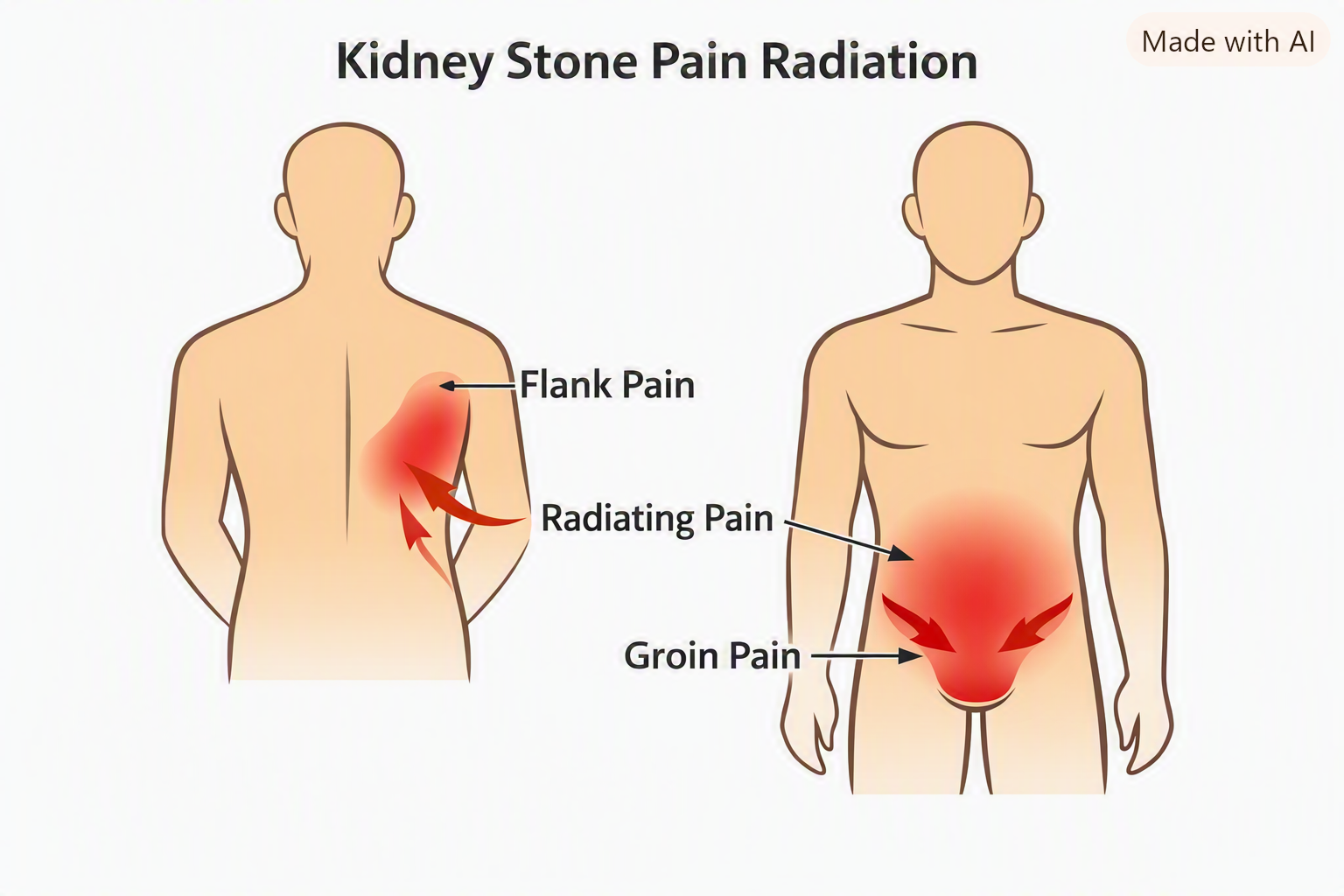
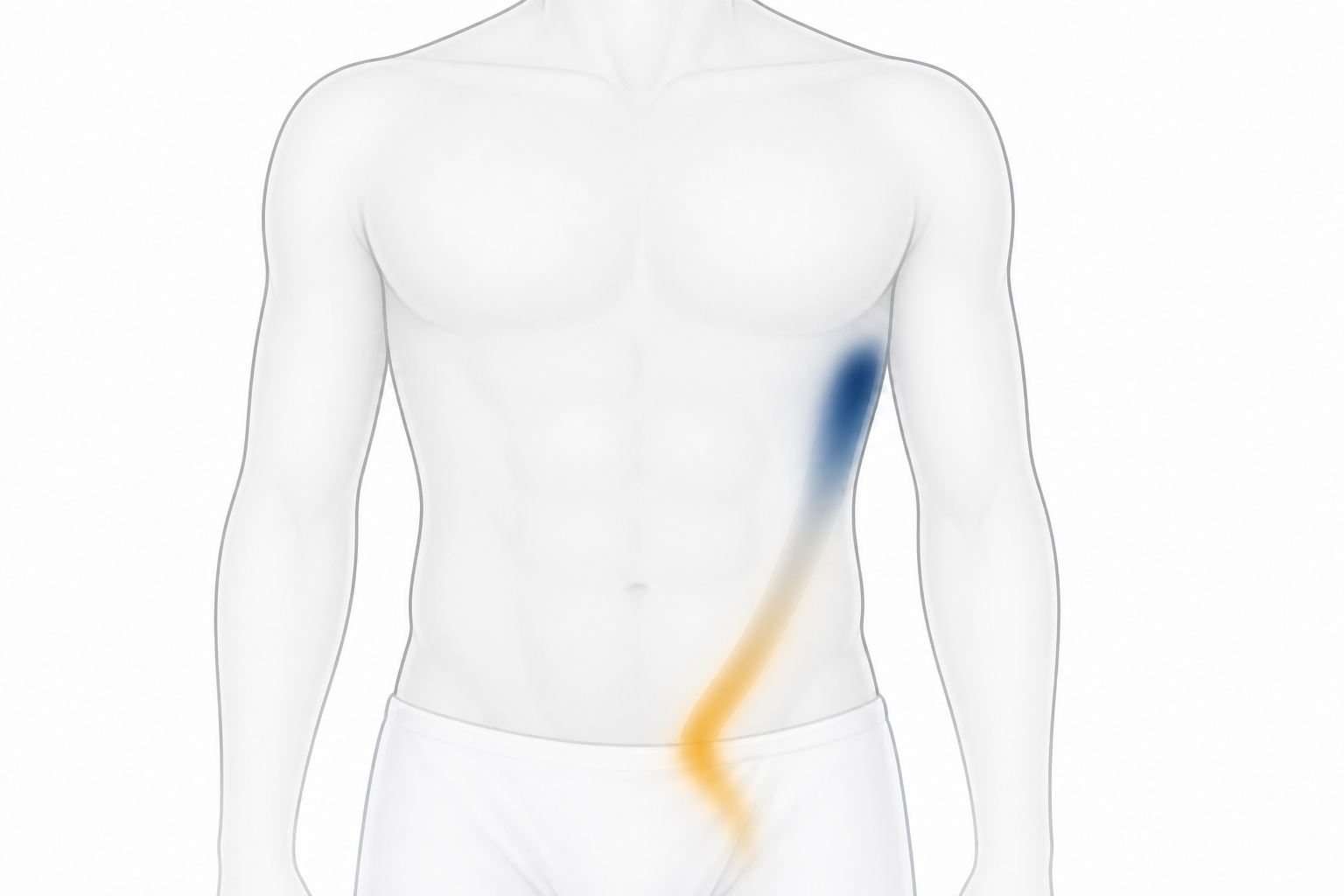
How pain location tells us where the stone is
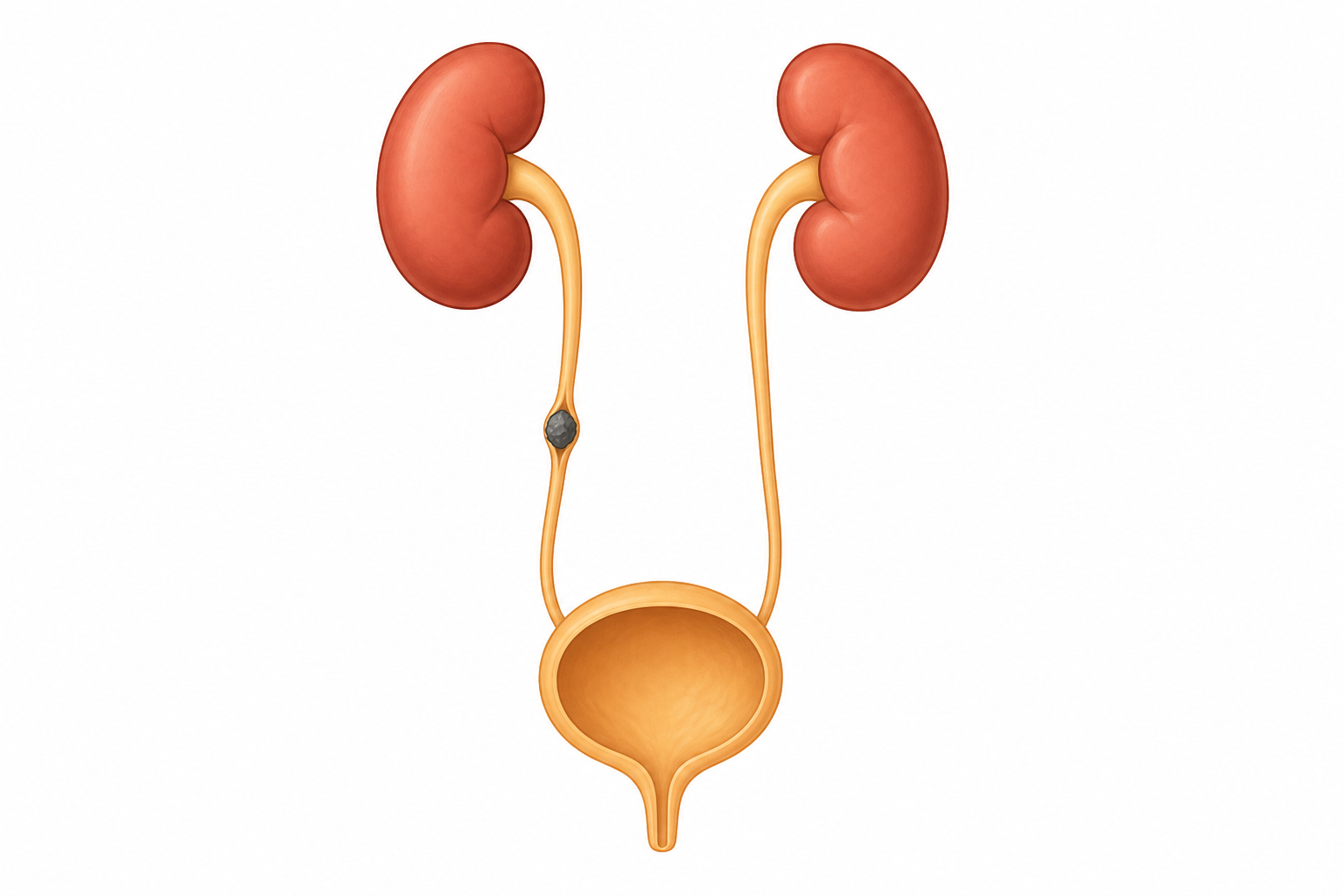
- Flank/back pain: Stone in kidney or upper ureter.
- Lower abdomen pain: Stone in mid-ureter.
- Groin/testicular pain (in men): Stone near lower ureter.
- Urinary urgency/burning: Stone close to bladder.
Other common symptoms
- Nausea and vomiting
- Blood in urine (pink, red, or tea-coloured)
- Burning while urinating
- Frequent, small amounts of urine
- Restlessness and sweating during pain peaks
Warning signs — go to hospital immediately
Most stone pain is not life-threatening, but these situations are emergencies:
Fever or Chills
Possible infection in a blocked kidney.
No Urine Output
Very little or no urine passing.
Pain on Both Sides
Pain on both sides at once.
Single Kidney
Only one working kidney or a kidney transplant patient.
- Severe vomiting preventing fluids/medicines.
- Pain unrelieved by painkillers.
- Diabetics with stone pain and fever.
If you experience any of these signs, especially fever with chills or inability to urinate , go to the emergency department immediately. Delaying treatment can lead to life-threatening sepsis or permanent kidney damage.
What not to do
Don’t keep masking pain with painkillers
The stone may still be blocking the urinary tract, silently damaging your kidney even if the pain is suppressed.
Don’t stop drinking water
Reducing water intake to avoid urination is a dangerous mistake. Hydration helps flush the stone and prevents further concentration.
Don’t rely only on home remedies
For a painful stone, home remedies are insufficient. You need proper medical evaluation to know the stone size, position, and whether it is causing a blockage.
What happens in OPD or emergency
- Pain relief first: Immediate management of acute pain.
- Tests:
- Urine: To check for blood or infection.
- Blood: To assess kidney function.
- Ultrasound: Safe, quick, and radiation-free first-look imaging.
- CT scan: The most accurate test for size, position, and hardness of the stone.
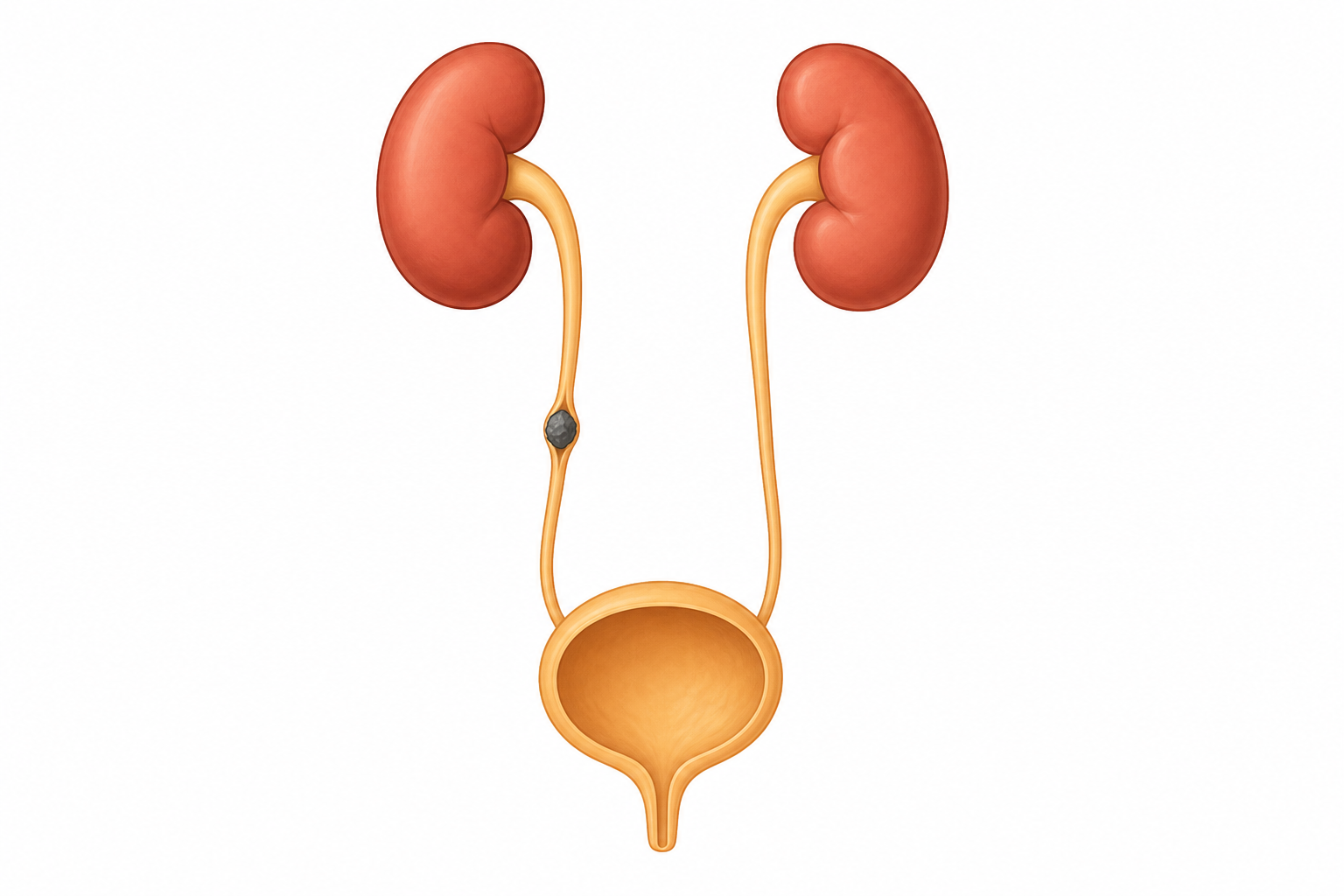
Will the stone pass on its own?
- < 5 mm: Often passes with fluids, pain control, and medicines that relax the ureter.
- 5 – 10 mm: Unpredictable — some pass, many don't.
- > 10 mm: Rarely pass, usually need a procedure.
Even small stones must be monitored. A stone stuck for weeks can silently damage the kidney , even without severe pain.
Preventing another stone
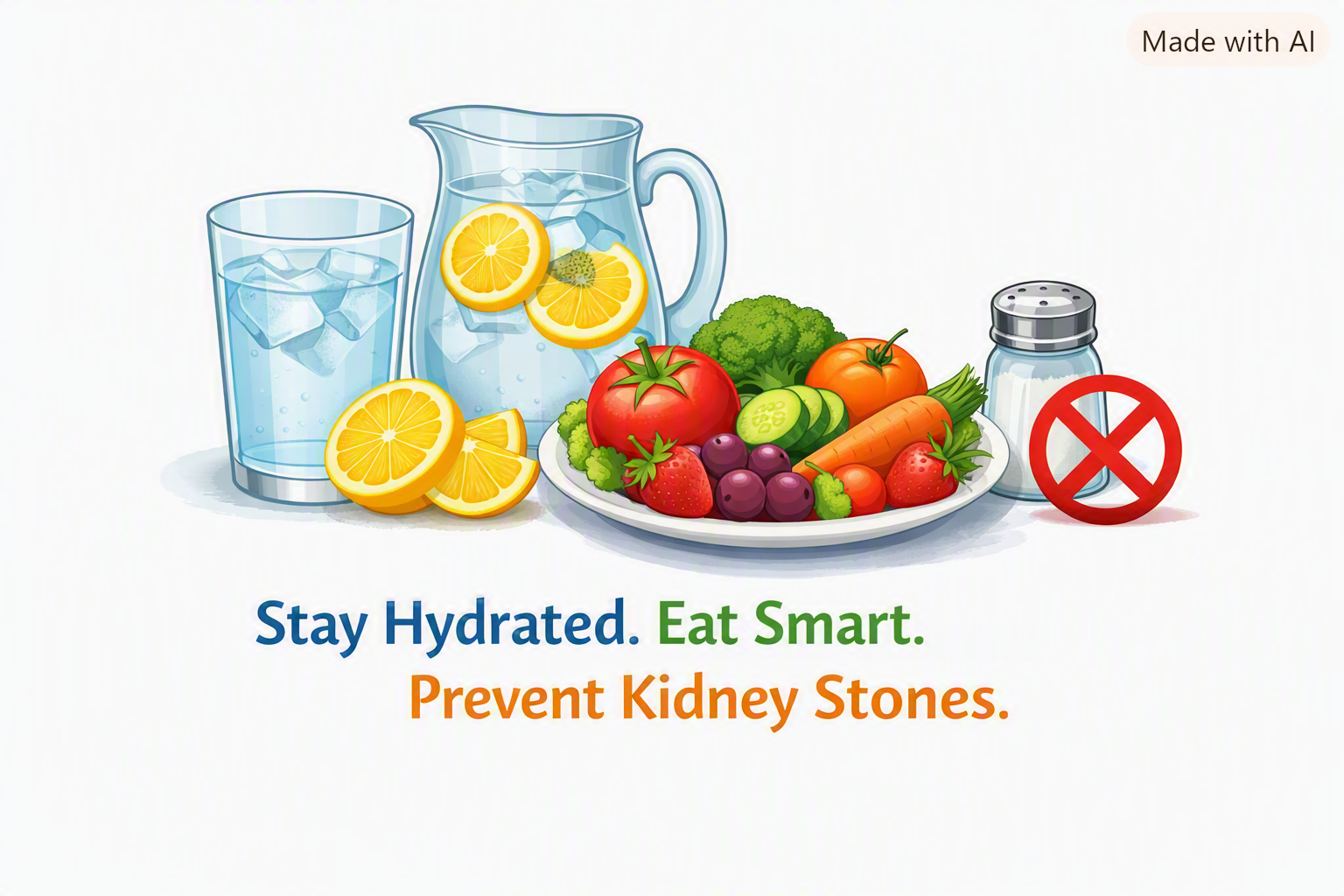
Stay Hydrated
Drink enough water to keep urine pale (≈3 litres/day in summer).
Cut Down on Salt
Reduce sodium intake to lower calcium excretion in urine.
Normal Dietary Calcium
Don't eliminate calcium; it binds with oxalate in the gut.
Add Citrus
Lemon water, oranges, and other citrus fruits help prevent stone formation.
- Limit red meat: Animal protein increases uric acid and calcium.
- Get stones analysed: If passed or removed, analysis helps tailor your prevention plan.
When to see a urologist
Consult a urologist if:
- You've had severe flank pain.
- A scan shows a stone.
- You notice blood in your urine.
- You've had stones before.
Bring previous reports and scans to your consultation. This helps the urologist track the stone's growth and plan the most effective treatment.
Conclusion
Kidney stone pain is not just severe—it is a signal that your urinary system is under stress. Recognizing the location of the pain, associated symptoms, and the red flags for emergency care can make all the difference.
With modern diagnostics and minimally invasive procedures, treatment is highly effective. Don't wait until a stone damages your kidney. Seek professional care early, stay hydrated, and follow your urologist's advice.
Need help with kidney stone pain?
Book a consultation with Dr. Manish Khattar at Medanta Lucknow. Bring your reports and get a personalized treatment plan.
📍 Medanta Super Speciality Hospital, Lucknow — 2nd Floor OPD, B-Wing, Room 33.
🕘 Mon–Sat, 9:00 AM – 5:00 PM.
Frequently Asked Questions
It is severe, sharp pain in the flank or back that comes in waves. It can radiate to the lower abdomen and groin and isn't relieved by lying still.
Yes, fever and chills with pain is a medical emergency, indicating a possible infection in a blocked kidney. Go to the hospital immediately.
Flank/back means kidney or upper ureter, lower abdomen means mid-ureter, groin means lower ureter.
If you have fever/chills, no urine output, pain on both sides, severe vomiting, or unrelieved pain.
5-10mm stones are unpredictable. Some pass, many don't. Stones >10mm rarely pass without medical intervention.
Drink at least 3 liters of water daily, cut down on salt, keep dietary calcium, and add citrus to your diet. Limit red meat and get your stones analysed for a tailored prevention plan.
Due to heat, sweating, low water intake, high salt/animal protein diet, and genetic predisposition.
Related Articles
Kidney Stone Treatment: A Complete Guide
Explore Medicine, ESWL, URS, RIRS or PCNL? — Which One Do You Actually Need?